
Abdominal Massage for Constipation: What Actually Works


Constipation is one of those symptoms people tend to normalize for far too long.
“I’ve always been this way.”
“My digestion is just slow.”
“I go every few days, that’s fine… right?”
Not necessarily.
Constipation is rarely just about fiber, water, or needing another supplement. More often, it’s a sign that something in the system isn’t moving the way it should.
And that’s where abdominal massage enters the conversation.
Why Abdominal Massage Can Help Constipation
Digestion is not just chemical. It’s mechanical.
Food moves through the digestive tract via coordinated muscular contractions, supported by circulation, nerve signaling, and the physical space within the abdomen. When any part of that system slows down, things begin to back up.
Abdominal massage works by influencing that physical side of digestion.
When applied correctly, it can:
Stimulate intestinal movement
Improve circulation to the digestive organs
Reduce tension in the abdominal wall
Support the natural rhythm of the gut
For some people, this alone creates noticeable change. For others, it’s the first step in understanding that their digestion isn’t just “random.”
Why Most Abdominal Massage Advice Falls Short
If you’ve looked this up before, you’ve probably seen instructions like:“Massage in a clockwise circle.”
That’s not wrong — but it’s incomplete.
The digestive system isn’t a flat circle. It’s a three-dimensional structure with areas that tend to hold more tension or stagnation than others.
Constipation, especially chronic constipation, is rarely evenly distributed. There are usually specific areas where movement is restricted.
And unless those areas are addressed, general massage can feel good without actually changing much.
Where to Focus (What Actually Matters)
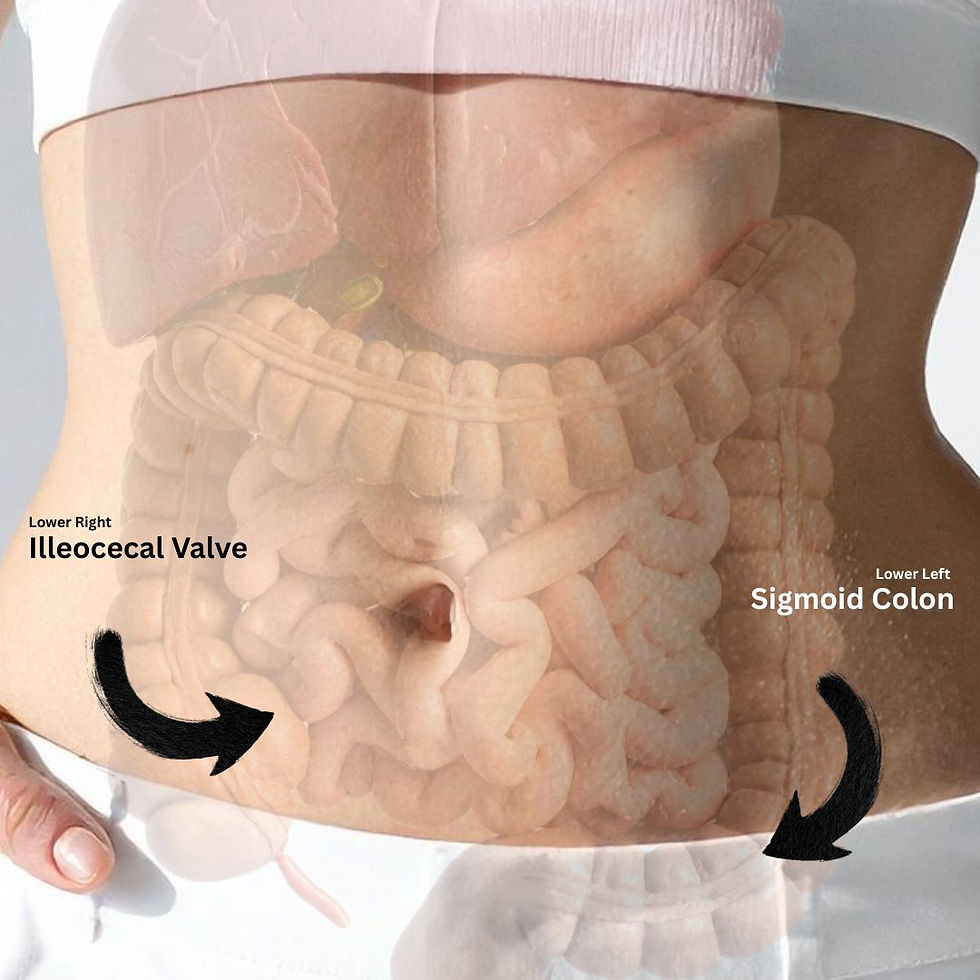
There are a few key regions that tend to show up repeatedly in patients with constipation.
The lower right abdomen is one of them — near the ileocecal valve — where the small intestine meets the large intestine. This is a common “traffic jam” point.
The lower left abdomen is another, where stool is stored before elimination. This area often feels dense, full, or resistant to movement.
And then there is the abdomen as a whole. In many cases, it’s not just one point — it’s a pattern of global tension, reduced mobility, and poor circulation.
This is why some people press on one spot and feel temporary relief, but the issue returns. The system hasn’t changed, only one area has been briefly stimulated.
A Simple Approach You Can Try
If you’re exploring abdominal massage at home, keep it simple.
Lie down in a comfortable position and bring your attention to your abdomen. Start with gentle pressure — not force.
Your goal is not to push anything through, but to encourage movement.
You can move in a clockwise direction, following the natural path of the colon, but pay attention to areas that feel tighter or more sensitive. Pause there. Breathe. Let the tissue respond.
A minute or two in each area is often enough.
If done consistently, this can begin to support more regular movement.
But it’s important to be realistic about what this can and cannot do.
When Constipation Is More Than Mechanical
For many people, constipation isn’t just about the intestines.
It’s also about:
Nervous system regulation
Chronic stress
Hormonal influence
Digestive strength
Long-term patterns in the body
You can massage the abdomen perfectly and still feel stuck if the underlying system isn’t functioning well.
This is why people often cycle through:fiber → supplements → probiotics → cleanses…and still feel like nothing truly resolves the issue.
Where Acupuncture and Chinese Medicine Fit In
This is where treatment becomes more precise.
Acupuncture helps regulate the nervous system, which plays a direct role in gut motility. When the body is constantly in a stress response, digestion slows. When that shifts, movement improves.
Chinese herbal medicine works internally to support digestion, fluid balance, and movement — depending on the pattern present.
From a Chinese medicine perspective, constipation may involve stagnation, dryness, deficiency, or heat. Treating all constipation the same way is part of why many approaches fail.
Why Chi Nei Tsang Changes Things
This is the piece most people haven’t experienced.
Chi Nei Tsang is not just “abdominal massage.” It’s a clinical approach to working with the organs and structure of the abdomen.
In patients with constipation, I often find:
Deep tension in the abdominal wall
Restricted movement of the intestines
Areas of stagnation that don’t respond to light touch
Poor circulation in key digestive regions
By working through these layers, we’re not just stimulating the surface — we’re helping restore movement in the system itself.
And that’s when things start to shift more consistently.
The Bigger Picture
Constipation is not a random inconvenience. It’s feedback.
It’s the body telling you that something is not moving — physically, neurologically, or functionally.
Abdominal massage can be a useful tool. Sometimes it’s enough. Often, it’s an entry point.
But if this has been a long-standing issue, the goal isn’t just to “get things moving” temporarily.
Take Action: Start With the Gut Reset
If you’re dealing with ongoing constipation, bloating, or symptoms that don’t seem to fully resolve, it’s usually not just about doing more — it’s about doing the right things for your body.
For some people, starting with a simple reset is the best first step. You can begin with my Free Beat the Bloat Guide or the 3-Day Gut Reset to support digestion and get things moving in a more structured way.
If you’re ready for more personalized support, you can book a Discovery Call or schedule a session with me to take a deeper look at what’s actually going on and create a plan that fits your body.
And for those who know they’re ready for a more comprehensive approach, the Buddha Belly Program is designed to address digestion, bloating, and gut health at a deeper level over time.
Constipation & Digestive Support in San Diego
If you’re dealing with ongoing constipation, bloating, or suspected SIBO, I offer an integrative approach that looks at the whole system — not just the symptom.
Treatments may include:
Acupuncture for motility and nervous system regulation
Customized Chinese herbal medicine
Chi Nei Tsang (medical abdominal therapy)
Nutritional and lifestyle guidance
Serving Hillcrest, North Park, Mission Valley, University Heights, Downtown San Diego, and surrounding areas.
Learn more or book here.
Frequently Asked Questions
Does abdominal massage help constipation?
It can. Abdominal massage may stimulate intestinal movement, improve circulation, and reduce tension in the abdomen. It tends to work best for mild or occasional constipation and as part of a broader treatment approach.
Where should I massage for constipation?
The lower right abdomen (ileocecal valve area) and lower left abdomen (sigmoid colon) are common areas of focus. However, the entire abdomen often benefits from gentle, consistent work rather than focusing on a single point.
How often should I do abdominal massage?
A few minutes daily can be helpful. Consistency tends to matter more than intensity.
Why doesn’t abdominal massage always work?
Because constipation is not always purely mechanical. Nervous system regulation, digestion, hydration, and underlying imbalances all play a role.
Can acupuncture help constipation?
Yes. Acupuncture can support gut motility by regulating the nervous system and improving communication between the brain and digestive tract.
What is Chi Nei Tsang?
Chi Nei Tsang is a form of medical abdominal massage that works with the internal organs to improve circulation, release tension, and support digestive function more deeply than surface-level techniques.


Comments