
How to Massage Your Ileocecal Valve for Bloating and SIBO (And Why It Matters)

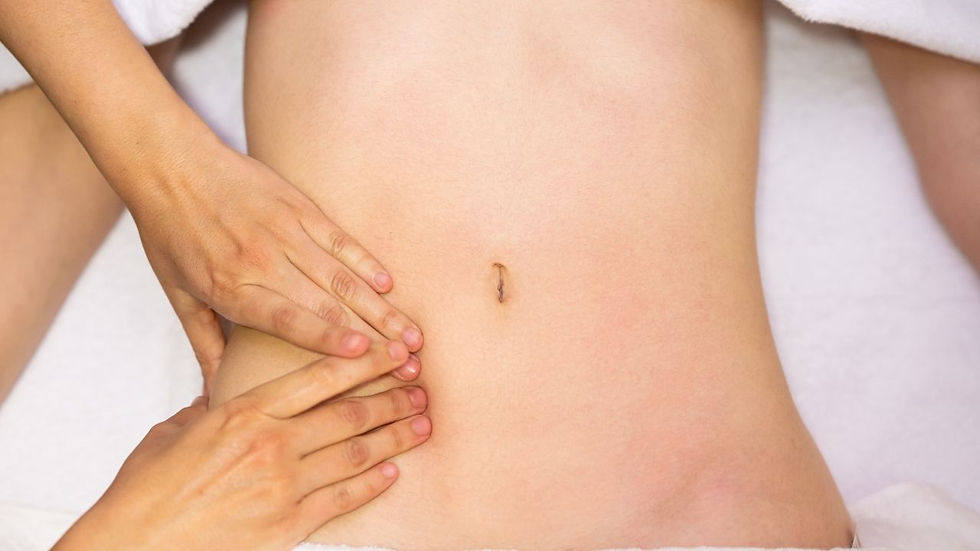
If you’ve ever noticed a tender or tight spot in your lower right abdomen, you’re not imagining it.
That area corresponds to something called the ileocecal valve — a small but important junction between your small intestine and large intestine. It acts as a kind of gate, helping move digested material forward and preventing backflow.
When it’s functioning well, you don’t notice it.
When it’s not, digestion can feel stuck, bloated, or unpredictable.
Why This Area Matters for SIBO and Bloating

From a Western perspective, SIBO is often described as bacteria overgrowing in the small intestine.
But what’s often missing from that conversation is movement.
The digestive system is not just about what’s in it — it’s about how things move through it.
If motility slows down, bacteria have more time to accumulate. If there is tension or restriction in the abdomen, that movement can be impaired even further.
The ileocecal valve sits right at a critical transition point. When this area is tight, congested, or not functioning well, it can contribute to:
Bloating after meals
Constipation or sluggish digestion
A feeling of pressure or tenderness in the lower right abdomen
How to Locate the Ileocecal Valve
Lie on your back and bring your attention to your lower right abdomen.
A simple way to find the area is to:
Locate your right hip bone
Move slightly inward and down toward the center of your abdomen
You’re not looking for a precise “button.” It’s more of a general region.
In many people, this area will feel slightly more tender or dense compared to the surrounding tissue.
A Simple Technique You Can Try
Using your fingers, apply gentle pressure into this area.
There’s no need to force anything. In fact, less is usually more.
You might slowly:
Press and hold
Make small circular motions
Breathe into the area
Spend a minute or two here and notice how it feels.
For some people, this brings a sense of release. For others, it may feel sensitive — which is often a sign that the area needs attention.
Where This Helps — and Where It Doesn’t
This kind of self-massage can be helpful for:
Mild bloating
Occasional constipation
Bringing awareness to the abdomen
But it’s important to be honest about its limits.
If you are dealing with chronic SIBO, persistent bloating, or long-term digestive issues, this is usually not just a “tight spot.”
It’s a system issue.

What I See Clinically
In practice, this area is rarely the only thing going on.
What I often find is:
Global tension in the abdomen
Poor circulation through the digestive organs
Nervous system dysregulation affecting motility
This is why people will try self-massage and feel temporary relief — but symptoms return.
The underlying pattern hasn’t changed.
Where Chi Nei Tsang Comes In
This is where a more comprehensive approach makes a difference.
Chi Nei Tsang works with the abdomen as a whole system, not just one point. It helps:
Release deeper layers of tension
Improve movement and motility
Increase circulation through the intestines
Support the body’s natural digestive rhythm
For patients with SIBO, this often becomes a missing piece — especially when symptoms keep returning despite diet changes or antimicrobial treatments.
The Bigger Picture
If your digestion feels off, it’s rarely just about one valve or one area.
It’s about how the entire system is functioning:
Movement
Nervous system regulation
Digestive strength
Structural tension
This small area in your lower abdomen can be a useful clue.
But it’s not the whole story.

When to Go Deeper
If you’re constantly dealing with:
Suspected or diagnosed SIBO
It’s worth looking beyond quick fixes.
Because at a certain point, it’s not about doing more things to your body.
It’s about helping your body function differently. If you’ve been dealing with persistent bloating, constipation, or symptoms of SIBO, it’s often not just about what you’re eating — it’s about how your digestive system is functioning.
While simple techniques like this can offer insight, lasting change usually requires a more comprehensive approach. In my clinic, I work with the digestive system as a whole using acupuncture, herbal medicine, and Chi Nei Tsang to improve motility, reduce tension, and support long-term gut function.
If you’re ready for more personalized support, you can book a Discovery Call or schedule a session with me to take a deeper look at what’s actually going on and create a plan that fits your body.
For some people, starting with a simple reset is the best first step. You can begin with my Free Beat the Bloat Guide or the 3-Day Gut Reset to support digestion and get things moving in a more structured way.
And for those who know they’re ready for a more comprehensive approach, the Buddha Belly Program is designed to address digestion, bloating, and gut health at a deeper level over time.
📍 SIBO & Digestive Support in San Diego
If you’re in San Diego and dealing with ongoing digestive issues, I offer a clinical approach that combines:
Chinese herbal medicine
Functional digestive support
This is especially helpful for patients who feel like they’ve tried everything but still aren’t getting lasting results.
❓ FAQ
What is the ileocecal valve?
The ileocecal valve is a small structure located between the small intestine and large intestine. Its role is to regulate the flow of digested material and prevent backflow. When it’s not functioning well, it may contribute to bloating, pressure, or irregular digestion.
Can the ileocecal valve cause bloating?
It can contribute. If this area becomes restricted or isn’t moving well, it may slow digestion and create a feeling of fullness or bloating, particularly after meals. However, it is rarely the only cause and is usually part of a larger digestive pattern.
Does massaging the ileocecal valve help SIBO?
Gentle abdominal massage may provide temporary relief by improving local circulation and awareness of the area. However, SIBO is typically related to broader issues like motility, nervous system regulation, and digestive function, which require a more comprehensive approach.
How do I know if this area is the problem?
A common sign is tenderness or sensitivity in the lower right abdomen. However, this alone is not diagnostic. Digestive symptoms such as bloating, constipation, or irregular bowel movements usually involve multiple factors.
Can abdominal massage improve digestion?
Yes, when applied appropriately. Techniques like Chi Nei Tsang work with the abdomen more globally, helping improve circulation, reduce tension, and support intestinal movement, which can positively impact digestion over time.
When should I seek treatment instead of self-massage?
If symptoms are persistent, recurring, or affecting your daily life, it’s worth addressing the underlying cause rather than relying on temporary relief. Chronic bloating, constipation, or suspected SIBO typically require a more structured treatment approach.


Comments