
The Interstitium, Fascia, and Acupuncture: What Does It All Mean?
- Dr. Jacintha "Jaz" Roemer

- Jun 12
- 7 min read

Over the past few weeks, I've had several patients reach out asking about the recent buzz surrounding the Interstitium. If you've seen the headlines, you may have heard it described as a "newly discovered organ" or a hidden network throughout the body that scientists are only beginning to understand.
Whenever a story like this captures public attention, it's worth taking a closer look. Is it truly a new discovery? Does it change our understanding of how the body works? And perhaps most importantly for many of my patients—does it have any connection to acupuncture?
The answer is both simple and complex.

What Is the Interstitium?
The Interstitium refers to a network of fluid-filled spaces found throughout the body. These spaces exist between tissues and around organs, muscles, blood vessels, and connective tissue structures. Rather than being a solid wall of tissue, researchers found that many areas contain microscopic compartments filled with fluid that may play important roles in communication, cushioning, and fluid movement.
While the media often referred to it as a "new organ," the reality is a bit more nuanced. Scientists have known these tissues existed for a long time. What was new was the imaging technology that allowed researchers to see these structures more clearly in living tissue.
Even so, the findings sparked tremendous interest because they offered a new perspective on how interconnected the body may be.
The Fascinating Connection to Fascia
As the discussion around the Interstitium grew, many practitioners began drawing comparisons to fascia.

Fascia is a continuous web of connective tissue that surrounds muscles, organs, nerves, blood vessels, and nearly every structure in the body. For decades, fascia was often viewed simply as packing material—a wrapping around the body's parts. Today, researchers increasingly recognize fascia as an active communication network involved in movement, sensation, force transmission, and overall body function.
If you've ever felt tension in one part of your body affect another seemingly unrelated area, fascia may be part of the explanation.
This growing understanding of connective tissue has led many healthcare professionals to rethink the body less as a collection of separate parts and more as an integrated system where everything influences everything else.
What Does This Have to Do With Acupuncture?
This is where the conversation becomes especially interesting.
Traditional Chinese Medicine describes a network of meridians through which Qi and Blood
circulate throughout the body. For thousands of years, these pathways have served as the foundation for acupuncture treatment.
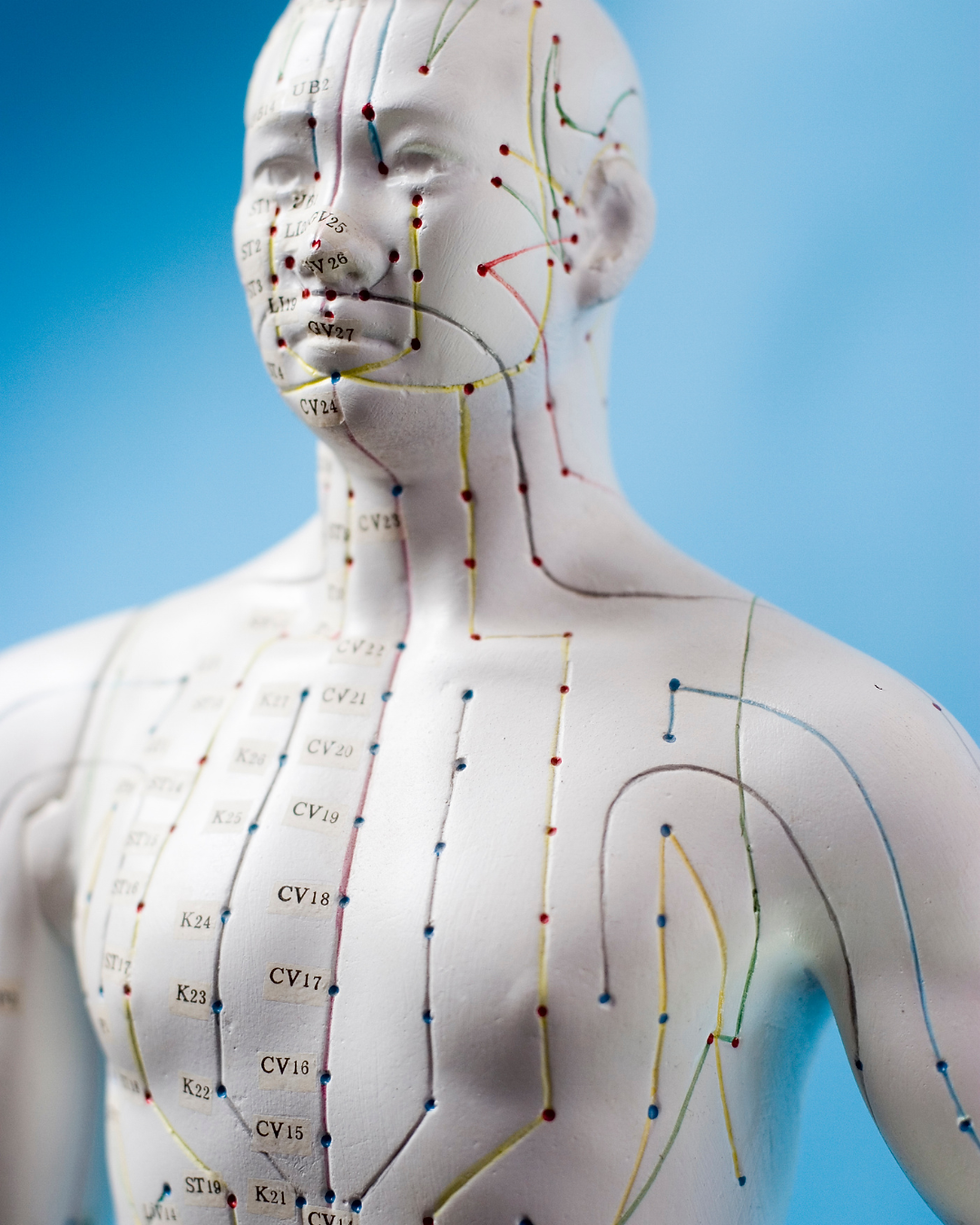
Modern science has not identified a single anatomical structure that perfectly matches the traditional meridian system. However, researchers have explored many possible explanations, including the nervous system, connective tissue planes, blood vessels, interstitial fluid flow, and fascia.
Some studies have found that many acupuncture points are located along fascial planes or areas where connective tissues converge. Emerging research continues to demonstrate that acupuncture influences multiple systems in the body, including the nervous system, immune system, connective tissue, and inflammatory pathways. Rather than acting on a single symptom, acupuncture appears to create a cascade of physiological responses that help the body regulate and heal itself. [See Reference 1]
Does this prove that fascia is the meridian system? Not necessarily.
Does it suggest that connective tissue may play an important role in how acupuncture affects the body? Many researchers believe it may.
The truth is that we are still learning.
Why This Matters for Patients
What excites me most about discussions like these is not whether science has "proven" ancient medicine right or wrong. It's that modern research continues to reveal just how interconnected the body truly is.
As an acupuncturist, I see this every day in practice.
A patient comes in for headaches and discovers their digestion improves. Someone seeks treatment for neck pain and notices their stress levels decrease. Another comes in for digestive issues and begins sleeping better.
These experiences can seem surprising when we view the body as separate systems operating independently. They make much more sense when we begin to understand the body as a highly connected network where changes in one area can influence many others.
Whether the explanation involves fascia, the nervous system, interstitial fluid networks, biochemical signaling, or a combination of all of these, the larger lesson remains the same: the body functions as an integrated whole.
The Bigger Picture
The Interstitium is a fascinating area of research, and scientists will undoubtedly continue learning more about its role in health and disease. It may eventually help explain aspects of fluid movement, inflammation, cellular communication, and tissue health that we don't yet fully understand.
For now, I see it as another reminder that medicine is constantly evolving. The more we learn, the more we discover how interconnected and intelligent the human body truly is.
Acupuncture has always approached health from a systems-based perspective, looking at relationships rather than isolated symptoms. Modern research is increasingly moving in that same direction.
While we may not have all the answers yet, the conversation surrounding the Interstitium highlights something important: there is still much to discover about how the body communicates, adapts, and heals.
And that's something worth being excited about.
Curious About How Acupuncture Supports Whole-Body Health?
At Dr. JazHands Acupuncture and Massage, we help patients address pain, stress, digestive concerns, hormonal imbalances, and nervous system dysregulation by treating the body as an interconnected system—not just a collection of symptoms.
Schedule an Free Consultation to learn how a holistic approach can help you feel your best.
References
1. Yunshan L, et al. Integrative Research on the Mechanisms of Acupuncture Mechanics and Interdisciplinary Innovation. Frontiers in Medicine. 2025. Available at: https://pmc.ncbi.nlm.nih.gov/articles/PMC11889876/
Ready to Experience a More Connected Approach to Healing?
Whether you're struggling with chronic pain, digestive issues, stress, anxiety, or simply feeling out of balance, acupuncture and Chi Nei Tsang offer a unique way to support the body's natural ability to heal and regulate itself.
While researchers continue exploring the Interstitium, fascia, and the body's communication networks, one thing remains clear: the body functions as an interconnected whole. When we support that connection, meaningful changes can happen.
At San Diego Herbal Medicine & Acupuncture, we combine Traditional Chinese Medicine with a modern understanding of anatomy, fascia, and nervous system regulation to help patients feel their best.
✨ Curious how acupuncture or Chi Nei Tsang may help you?
📅 Schedule your appointment today and take the next step on your healing journey.
👉 Book Online: Schedule Now
👉 Learn More About Chi Nei Tsang: [SERVICE PAGE LINK]
👉 Subscribe on YouTube for more videos on acupuncture, digestion, fascia, and holistic health: [Dr. Jaz's YOUTUBE Channel]
Frequently Asked Questions About the Interstitium, Fascia, and Acupuncture
Is the Interstitium a newly discovered organ?
Not exactly. While recent research brought significant attention to the Interstitium, scientists have known about these tissues for many years. What was new was the ability to visualize fluid-filled spaces within living tissue using advanced imaging techniques. Some media outlets referred to it as a "new organ," but many researchers consider it a newly recognized way of understanding existing anatomy.
What is the difference between the Interstitium and fascia?
The Interstitium refers to fluid-filled spaces found throughout connective tissues in the body. Fascia is the connective tissue network that surrounds and supports muscles, organs, nerves, and blood vessels. While they are related and often overlap anatomically, they are not the same structure. Researchers continue to study how fascia and interstitial fluid interact and communicate throughout the body.
Does the Interstitium prove that acupuncture meridians exist?
No. Current research has not identified a specific anatomical structure that definitively proves the existence of acupuncture meridians as described in Traditional Chinese Medicine. However, some researchers have found interesting relationships between acupuncture points, fascial planes, connective tissue networks, and interstitial fluid pathways. More research is needed to understand these connections.
How does acupuncture affect fascia?
Research suggests that acupuncture needles interact with connective tissue and fascia by creating mechanical stimulation that can influence local circulation, tissue tension, and nervous system signaling. Many researchers believe that these connective tissue responses may be one of several mechanisms through which acupuncture produces therapeutic effects.
Can acupuncture help improve circulation and fluid movement?
Acupuncture has been shown to influence blood flow, nervous system activity, and tissue function. Many patients report improvements in circulation, swelling, muscle tension, and overall well-being following treatment. While researchers continue to investigate the exact mechanisms, acupuncture is commonly used to support the body's natural regulatory processes.
What is Chi Nei Tsang and how does it relate to fascia?
Chi Nei Tsang is a specialized form of abdominal bodywork rooted in Traditional Chinese Medicine. It focuses on the abdominal organs, connective tissues, and energetic pathways of the body. Because the abdomen contains extensive fascial connections and fluid networks, Chi Nei Tsang may help improve mobility, circulation, digestion, and overall body awareness.
Can fascia contribute to pain and tension?
Yes. Modern research increasingly recognizes fascia as an important contributor to movement, posture, sensation, and pain. Restrictions or tension within fascial tissues may contribute to discomfort, limited mobility, and chronic pain patterns. Therapies such as acupuncture, massage, stretching, movement practices, and bodywork may help improve fascial mobility and function.
Is acupuncture supported by modern research?
Yes. Thousands of studies have investigated acupuncture for conditions including chronic pain, headaches, stress, anxiety, insomnia, digestive disorders, and musculoskeletal conditions. While research continues to evolve, many healthcare systems and medical organizations now recognize acupuncture as a valuable complementary treatment option for a variety of health concerns.
Can Acupuncture and Chi Nei Tsang be used together?
Absolutely. Acupuncture and Chi Nei Tsang are often complementary therapies. Acupuncture helps regulate the nervous system and promote whole-body balance, while Chi Nei Tsang focuses on releasing tension and improving function within the abdomen and digestive system. Together, they can provide a comprehensive approach to supporting physical and emotional well-being.
📍 Visit Us in San Diego — Or Start Your Healing Journey Online
Dr. JazHands Acupuncture and Therapeutic Massage is located at San Diego Herbal Medicine & Acupuncture is centrally located in Hillcrest, San Diego, and serves the surrounding areas including Downtown San Diego, North Park, Mission Valley, La Jolla, and Pacific Beach. We also work with patients from Los Angeles, Orange County, Escondido, Oceanside, Irvine, and Huntington Beach, as well as virtual clients worldwide from India, Singapore, Europe, and beyond.
🌀 Whether you're seeking digestive relief, emotional balance, or a deeper connection to your health through Chi Nei Tsang, Acupuncture, or our signature Buddha Belly Program, we're here to support your journey—in person or online.
📅 Book your session or explore our digital offerings here: www.jazhandsmassageandacu.com


Comments